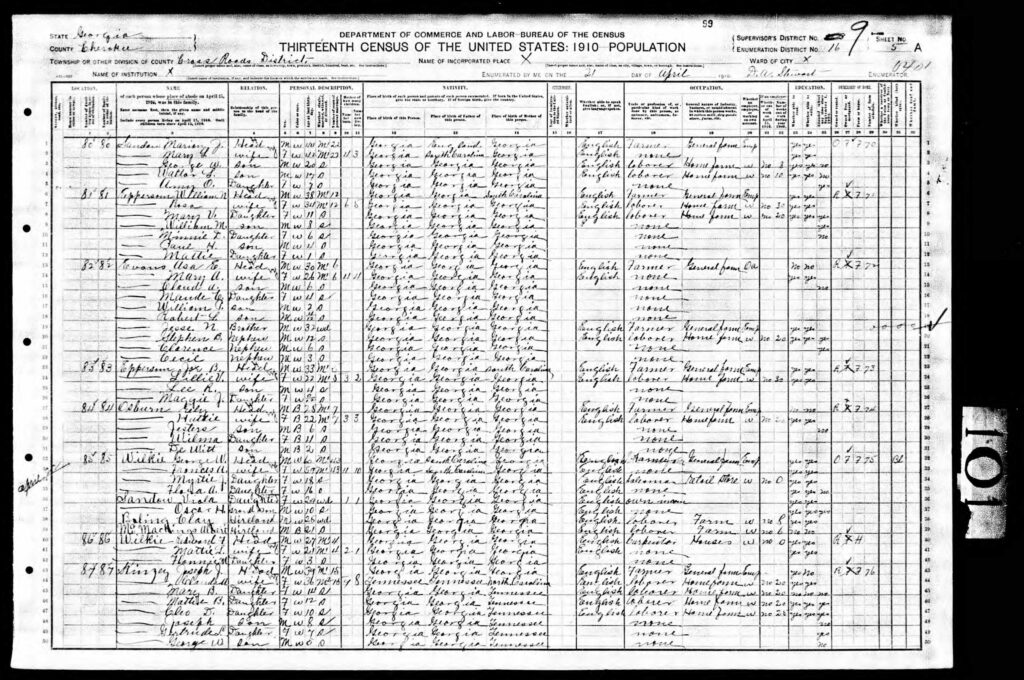
Between 1910 and 1950, federal census records provide important clues about the Black families who lived in Forsyth County, Georgia, and the communities they built. By comparing households across multiple census years, this research seeks to reconnect individuals and families, document where they lived, and follow changes that occurred across generations. These records are being examined alongside other historical sources to help preserve the identities and stories of people whose presence in the county has often been overlooked.
Why Reconstruct These Communities?
Reconstructing these communities is about more than compiling names from census pages. Each household can reveal relationships between families, neighbors, churches, schools, farms, and other parts of community life. Following the same people across different records can also show marriages, births, deaths, migrations, changes in property and occupations, and connections that may otherwise remain hidden.
Sources Being Used
This project uses a combination of federal census records and other historical sources to identify individuals, reconstruct households, and trace connections between families and communities. Records are compared across multiple years whenever possible rather than relying on a single source.
- U.S. Federal Census records, 1910–1950
- Georgia death certificates and vital records
- Marriage records
- Land and property records
- Church and cemetery records
- Historical newspapers
- City and county directories
- Maps and local historical records
- Family records, photographs, and oral histories
Building the Community Record
As individuals and households are identified, the information is being organized into a larger community record. Families can be connected across census years, surnames can be followed through different households, and locations can be compared with churches, cemeteries, schools, farms, and property records. Over time, these connections can help reveal how the community was structured and where families went across generations.
What This Research Will Include
- Family and household profiles
- Census transcriptions from 1910–1950
- Surname and family connections
- Community maps and historic locations
- Churches, cemeteries, and schools
- Property and land connections
- Migration patterns across generations
- Photographs, documents, and historical records
- Research notes, questions, and new discoveries
Research in Progress
This is an ongoing research project. Names, relationships, locations, and historical details may be updated as additional records are located and evidence is compared. Some connections are well documented, while others remain working leads that require further research. New discoveries, corrections, photographs, documents, and family knowledge can help strengthen and expand the community record.
Help Preserve the Story
Historical records can tell us a great deal, but they do not tell every story. Family photographs, funeral programs, church records, cemetery information, letters, newspaper clippings, personal memories, and other materials may preserve details that cannot be found in official records. If you have information connected to these families or communities, your knowledge may help fill gaps in the historical record.